When the NFL announced Bad Bunny as the 2026 Super Bowl...





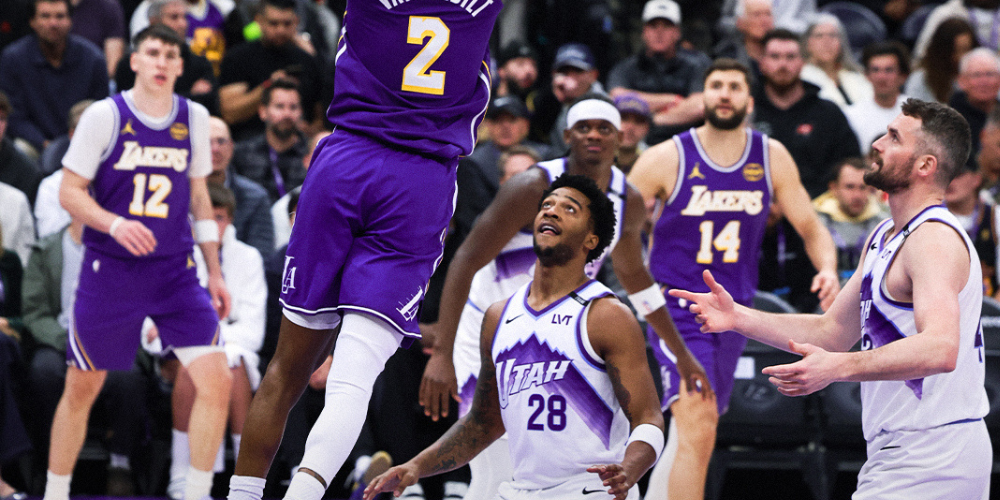
Salt Lake City was buzzing, and by the end, the Lakers had pulled away 143–135. The box score makes it seem like business as usual — Luka Dončić flirting with another triple-double, LeBron James weaving through traffic — but for Utah, the game was more than numbers. It was a snapshot of promise tangled with persistent growing pains. Keyonte George carried much of the Jazz narrative.
He poured in 34 points and handed out eight assists, showing the difference between a rookie who’s talented and a young guard starting to command a game. Isaiah Collier chipped in 18 points and 13 assists, keeping Utah’s offense humming, while Ace Bailey knocked down key baskets at the right moments to keep the Jazz within striking distance.
Utah’s first half was impressive. They scored 78 points before the break, with crisp passes, solid spacing, and smart decisions. George led the way, exploiting gaps, reading the defense, and making teammates better without forcing the ball.

Instagram | utahjazz | George’s 18 points fueled a dominant 78-point first-half scoring blitz for Utah.
Brice Sensabaugh chipped in when needed, keeping the defense guessing, and Bailey’s 19 points on 13 shots were a masterclass in patience. He didn’t have to create chaos to score; he picked his spots, showing that Will Hardy’s steady hand in player development is paying dividends.
Kyle Filipowski’s 13 rebounds stood out. He wasn’t just grabbing boards — he was asserting himself physically, showing that the offseason strength work is finally translating into NBA toughness.
Jusuf Nurkić continues to serve as the offense’s connective tissue. His passing, dribble handoffs, and ability to create space for cutters are vital, but finishing inside is still a work in progress. The tension between his playmaking and scoring efficiency is a recurring theme, one that Utah will need to monitor as the season unfolds.
Collier showed glimpses of the complete player Utah has hoped for: sharp court vision, confident scoring, and crisp passing. He still has defensive holes — ball-watching and late rotations pop up — but his upside in the half-court is undeniable. The absence of Cody Williams, who had just come off a strong outing, raised questions about rotation consistency, an issue Hardy has been tinkering with all season.
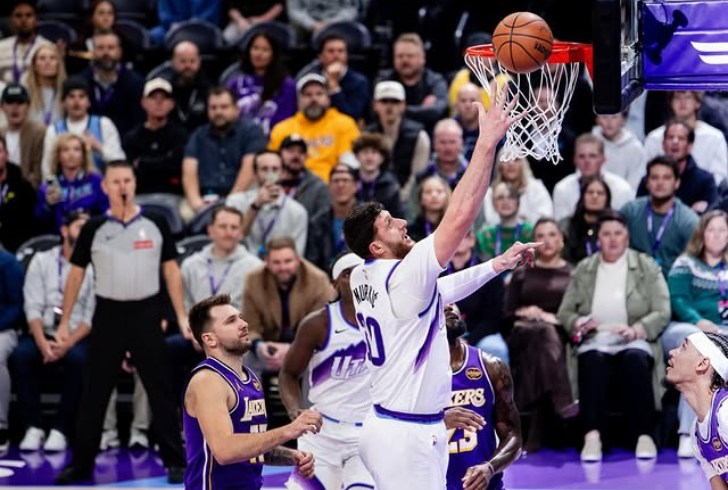
Instagram | utahjazz | Utah’s loss exposed familiar defensive holes, yet Keyonte George’s steady rise remains a bright spot.
George has learned to pick his moments carefully. When lanes open, he drives with aggression; when they don’t, he moves the ball or finds the open shot. Spot-up situations are less of a gamble now, and his handling in dribble-hand-off and isolation scenarios has a new calmness. He’s no longer just reacting—he’s running the offense, shaping how the Jazz move on the court.
Defense remains the stickiest issue. Matchups get tested, rotations lag, and advanced metrics aren’t forgiving. Scoring has improved, but Utah’s success in close games will depend on him shoring up those defensive shortcomings.
Extension eligibility is near, and George’s trajectory makes him a candidate for the Jazz’s long-term core. The next step is blending his offensive growth with consistent defense and thoughtful roster support to see just how high Utah can go.