When the NFL announced Bad Bunny as the 2026 Super Bowl...


When the NFL announced Bad Bunny as the 2026 Super Bowl halftime headliner, the reaction was split. Critics questioned whether a Spanish-language artist could connect with a nationwide audience. Some labeled him too political. Others argued he was not “American” enough for a stage as visible as the Super Bowl.
Yet when the night arrived, one of the largest audiences in National Football League history tuned in. Streaming numbers spiked within hours. Album sales climbed. Social media traffic surged. Viewers who did not understand every lyric still moved to the rhythm.
The moment did not erase political divides overnight. Instead, it shifted something quieter and more lasting: cultural lines felt less rigid.
Bad Bunny, born Benito Antonio Martínez Ocasio, represents a Puerto Rico shaped by more than 400 years of exploitation and colonial control. Still, his art does not center on defeat. It highlights celebration, food, music, love, and family. That distinction matters.
Communications strategist Anat Shenker-Osorio often describes progressive messaging as starting with, “boy, have I got a problem for you.” Bad Bunny flips that approach. He invites the audience to dance first. Celebration becomes the entry point, not complaint.
His Grammy-winning album “Debí Tirar Más Fotos” made history as the first Spanish-language album to win Album of the Year. The project blends generations and genres in ways that feel intentional rather than chaotic.
“Baile Inolvidable” carries salsa rhythms rooted in Caribbean tradition. “Tití Me Preguntó” pulses with dembow and reggaeton influences.
The contrast between salsa and dembow within a single body of work challenges assumptions about Latin music. Listeners who once dismissed reggaeton as repetitive discovered nuance and range. The music did not argue for inclusion; it created it through sound.
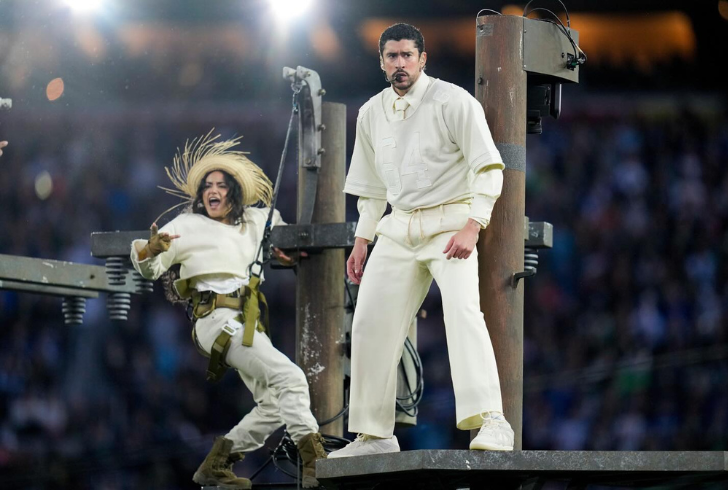
Instgaram | remezcla | Bad Bunny transforms a legacy of hardship into a global celebration of Caribbean culture.
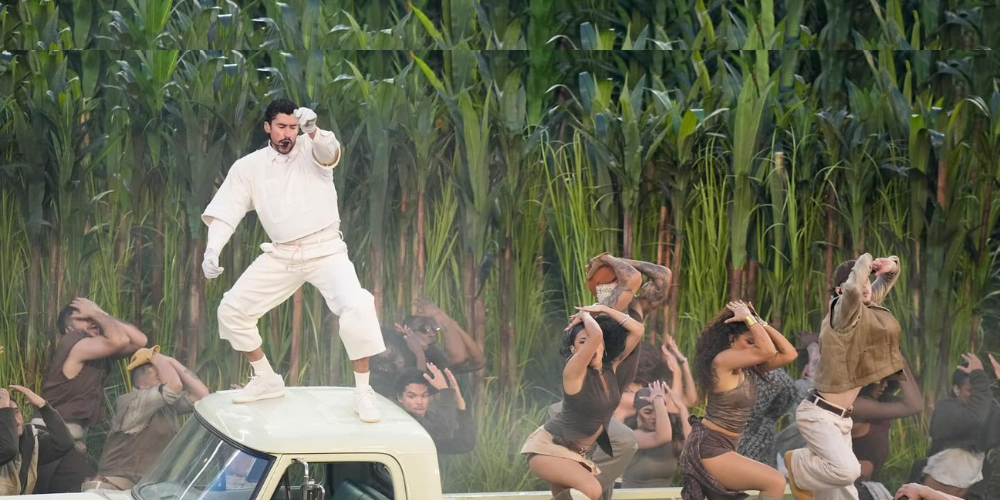
The halftime show delivered spectacle, yet its strongest message lived in the details. Performers dressed as sugar cane plants crossed the stage. Workers climbed electrical poles. Empty white plastic chairs sat scattered under bright lights.
Each image referenced Puerto Rico’s economic history and present reality: The dismantling of its agricultural base. Environmental crises. Gentrification that is fueled by tax incentives for wealthy developers. Over 125 years of U.S. colonial influence condensed into visual cues rather than speeches.
The result was subtle but effective. Viewers searched for meaning in real time. Curiosity led to research. Research led to awareness. Information discovered by choice often resonates more deeply than facts delivered as instruction.
Today, two out of three Puerto Ricans live outside the island, forming a vast diaspora. That statistic hovered behind the visuals without being spelled out. Exposure replaced argument.
The performance extended beyond Puerto Rican identity. It addressed a broader climate shaped by suspicion and division. Public discourse often frames cultural growth as loss. Fear-based messaging suggests that someone else is taking what belongs to “real” Americans.
Bad Bunny’s message moved in the opposite direction. A statement displayed on the jumbotron encouraged viewers to see one another through a lens of love rather than hate. Former President Barack Obama praised the performance for communicating a simple idea: there is room for everyone.
The contrast was sharp. Turning Point USA staged an alternative “All-American Halftime Show” for audiences who preferred a narrower cultural definition. The split highlighted a larger debate over identity and belonging.
Some observers compared Bad Bunny’s approach to John Lennon’s philosophy in “Imagine.” Lennon did not draft policy proposals; he asked listeners to rethink the frame itself. That imaginative shift can challenge entrenched power structures. Fear thrives on limitation. Expansion disrupts it.
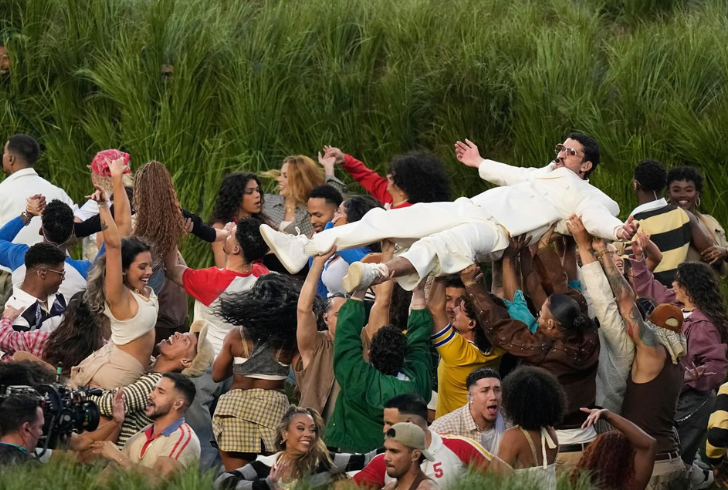
Instagram | remezcla | Bad Bunny’s unapologetic performance redefined cultural belonging through a lens of joy and confidence.
NFL executives reportedly worried that language barriers could limit audience connection. Bad Bunny declined to switch to English for broader appeal. Instead, he trusted the audience to meet him halfway.
The decision carried a measurable impact. Duolingo reported a 35% increase in users beginning Spanish lessons following the show. Proximity, not translation, sparked engagement.
Journalist Jim Heath argued that backlash toward Bad Bunny stems from anxiety about identity control. “Latino culture is framed as divisive,” Heath wrote, “only because its permanence challenges an older mythology about who America is.”
Rather than dilute his roots, Benito expanded the definition of who belongs on the country’s largest stage.
Public persuasion often relies on debate. The assumption is that facts must defeat opposing arguments. Cultural change rarely follows that script. Emotion frequently opens doors that logic alone cannot.
Bad Bunny’s strategy rests on shared experience. Music becomes common ground. Celebration becomes connection. The invitation is clear: learn about Puerto Rico, enjoy the rhythm, and recognize overlap instead of difference.
No demand to conform. No pressure to surrender identity. The circle widens without asking anyone to shrink.
The 2026 Super Bowl halftime show did more than entertain. It demonstrated how culture can shift perception through joy, curiosity, and confidence. By refusing to dilute his language or message, Bad Bunny expanded the conversation about who belongs on America’s biggest stage.
Movements often grow through confrontation. This one grew through rhythm, imagery, and invitation. The line between “us” and “them” did not vanish overnight. It simply became less fixed. In a polarized climate, that subtle shift carries weight.