When the NFL announced Bad Bunny as the 2026 Super Bowl...


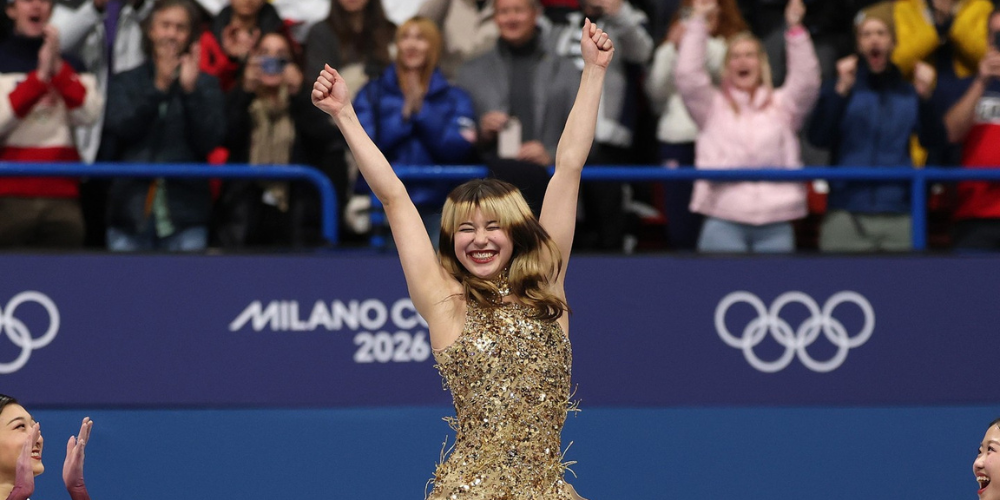
Women’s figure skating has traditionally been a sport defined by pressure and impossibly small margins. One fall or shaky landing can rewrite the entire competition. At the 2026 Winter Olympics in Milan, Alysa Liu delivered a performance that changed the atmosphere entirely. Her gold medal win felt bigger than the result itself. Skating to “MacArthur Park,” she brought a sense of confidence and openness that stood out on a stage usually filled with tension.
The win also ended a long wait. No American woman had claimed Olympic gold in figure skating since 2002. Years passed, filled with close calls, legendary careers that narrowly missed the top spot, and a long stretch of Russian dominance. Liu’s victory broke that pattern. She didn’t rely on quadruple jumps or overwhelming technical power. Instead, she won through sharp musicality, composure under pressure, and complete command of the ice.
For decades, Olympic gold in women’s skating slipped just out of reach for American favorites:
Nancy Kerrigan – Silver (1994)
Michelle Kwan – Silver (1998), Bronze (2002)
Sasha Cohen – Silver (2006)
Gold medals from Tara Lipinski in 1998 and Sarah Hughes in 2002 brought celebration, yet the sport soon shifted. From 2014 through 2022, Russian skaters dominated with technically loaded programs, often centered on teenage athletes performing quadruple jumps.
The 2026 podium marked a clear break from that pattern. For the first time since 2010, no Russian woman finished among the medalists.
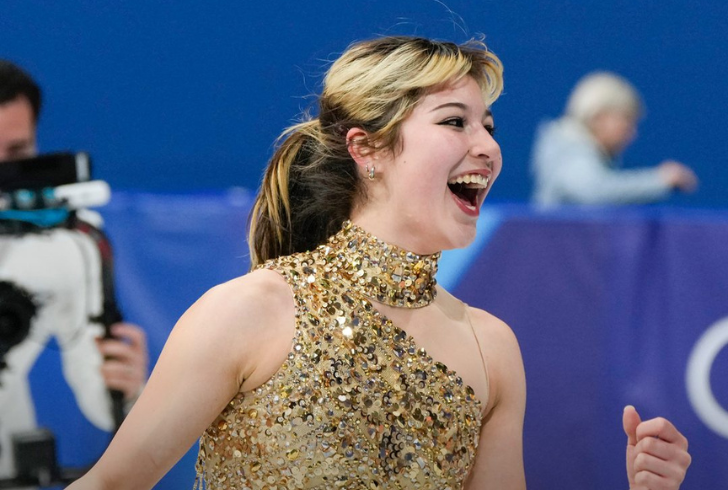
Instagram | theathletichq | Alysa Liu’s return to competition signaled a victory of mindset over medal counts.
When Alysa Liu stepped onto Olympic ice, she carried herself like a skater already at peace with the result. The 20-year-old Californian, who retired at 16 after the 2022 Olympics and World Championships, returned two years later with a new mindset.
Asked whether the Olympics felt stressful, Liu answered bluntly:
“Oh hell no. … Competitions are where I’m least stressed because people get to see what I do. That’s why I do it. So I can share my work.”
That philosophy showed from the first beat of “MacArthur Park.” The disco classic energized the arena. While many Olympic programs lean heavily on dramatic classical pieces, Liu chose rhythm and momentum. The crowd clapped along. The performance felt open, not guarded.
The program featured seven clean triple jumps, paired with strong edge quality and speed, while the transitions were executed confidently without any visible hesitation.
She did not attempt a triple axel or quadruple jump. Still, the skate proved that scoring potential extends beyond base value. Judges rewarded her with a season’s best 150.20 in the free skate, placing her firmly in first.
As she exited the ice, she looked into the camera and said:
“That’s what I’m fucking talking about!”
The moment felt unscripted and real. It captured the tone of the night.
Amber Glenn entered the free skate in 13th place after a painful short program. Her goal shifted from podium contention to creating a positive Olympic memory.
She delivered a season-best performance, starting with a powerful triple axel and successfully landing five consecutive jumping passes. Her only stumble came on the triple loop, where she lost control and touched the ice with her hand.
The triple loop—popped in the short program—remained the one technical barrier. Glenn ultimately finished fifth, just 4.25 points off the podium. The base value of a triple loop stands at 4.9 points, enough to close the gap on paper. Still, competitions unfold as a whole, not in isolated elements.
Her free skate ranked third highest of the night, and she led for much of the event. The resilience on display carried as much weight as any medal.
Isabeau Levito, eighth after the short program, continued her Italian theme with a free skate to “Cinema Paradiso.” Known for her refined lines and exact positions, Levito typically skates with composure.
This time, the opening triple flip ended in a fall, eliminating a planned triple toe loop combination. She stayed upright on the remaining jumps but did not reinsert the missed combination later in the program.
The result placed her outside medal contention. However, at her age, the Olympic stage may serve as groundwork for future success—much like Liu’s sixth-place finish in 2022 set the stage for her 2026 breakthrough.
Adeliya Petrosian
Adeliya Petrosian, competing as an Individual Neutral Athlete, attempted the event’s only quadruple jump—a quad toe loop. She underrotated and fell, continuing a season-long struggle to land the element cleanly.
She recovered to land her remaining triples and finished sixth. Her tango-themed free skate showed improved maturity compared to her Michael Jackson short program. Still, the performance lacked emotional impact.
Mone Chiba
Mone Chiba delivered a light, controlled program to “Romeo + Juliet.” Minor underrotations cost technical points. The skate remained polished but lacked the scoring push needed for a medal. She placed fourth.
Kaori Sakamoto
Kaori Sakamoto, the reigning Olympic bronze medalist, entered as a favorite and had announced plans to retire after these Games.
Her free skate to an Edith Piaf medley showcased her signature speed and edge depth. She completed her first four jumping passes cleanly. Then a shaky triple flip and a missed triple toe loop combination left points unclaimed. A costume issue near the end—her skirt caught in a strap—symbolized a night slightly off balance.
She finished just 1.89 points behind Liu, earning silver.
Ami Nakai
Seventeen-year-old Ami Nakai led after the short program, which featured a triple axel. Skating last, she opened her free skate—set to a cover of “What a Wonderful World”—with another triple axel.
She opened with a clean triple axel, demonstrating strong control and precision. Later in the program, the second half of her triple lutz–triple toe combination was popped, and underrotations were noted on both her triple flip and triple loop, affecting her technical score.
The technical panel reduced her score after review. She placed ninth in the free skate but held onto bronze overall.
Teenage Olympic champions such as Alina Zagitova and Anna Shcherbakova set a precedent for young winners. Nakai’s performance was strong, yet it lacked the artistic impact required to secure gold.
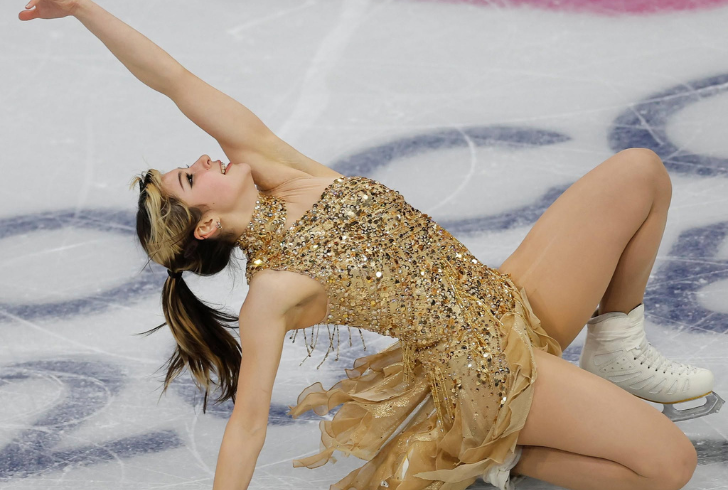
Instagram | guardian_sport | Liu transformed the high-stakes Olympic ice into a canvas for performance.
The period from 2014 to 2022 centered on high-risk technical arms races. Many skaters described competition as overwhelming. The pressure often felt visible.
One haunting Olympic memory involved 15-year-old Kamila Valieva breaking down after her performance while coaches reacted harshly behind the boards.
The medal ceremony in Milan carried a noticeably different energy. Liu celebrated openly before sharing an emotional embrace with Nakai. The final podium featured:
Gold – Alysa Liu (USA)
Silver – Kaori Sakamoto (Japan)
Bronze – Ami Nakai (Japan)
The mood felt less tense than relieved.
Liu’s performance reinforced an important truth about figure skating. Technical difficulty still matters, but the sport has always depended just as much on interpretation, flow, and emotional presence. Liu stepped onto Olympic ice as if it were a performance stage, not a battlefield.
Her success came from perspective rather than pure technical bravado. After leaving the sport at just 16, Liu returned with a new outlook. She reshaped her training and mindset around enjoyment and curiosity instead of constant survival.
That change subtly reshaped the conversation around women’s skating. Athletes will continue pushing technical limits, but the sport no longer needs to revolve entirely around pressure and endurance.
It reintroduced spontaneity and authenticity to Olympic figure skating.
The 2026 women’s event will likely be remembered for two reasons: the return of American Olympic gold and a noticeable change in the sport’s emotional atmosphere. Liu showed that elite skating can combine precision, maturity, and genuine happiness.
She didn’t conquer pressure through force. She simply refused to skate under its shadow.
By the time the medals were awarded in Milan, women’s figure skating felt different. It felt lighter.