The 2026 FIFA World Cup is already making history, but one of its most talked-about additions will arrive during the tournament’s biggest match. For the first time, the FIFA World Cup final will feature an...


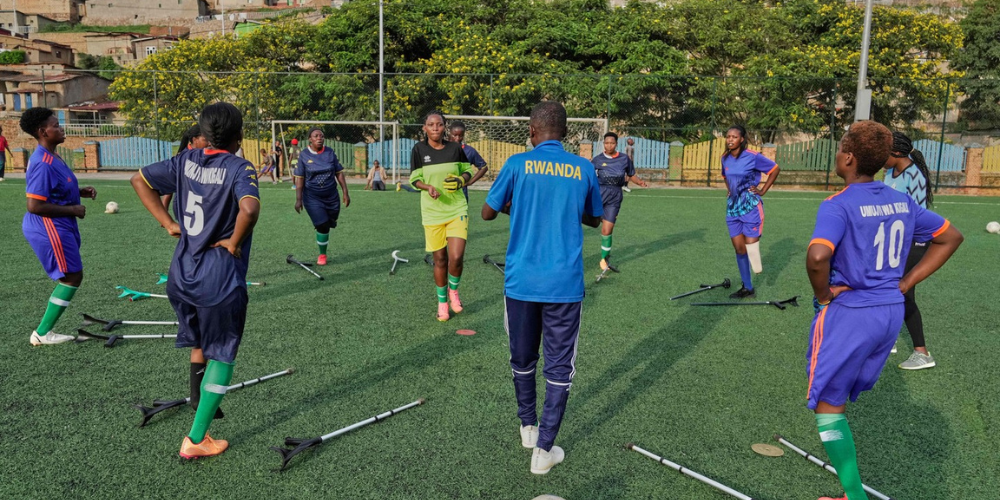
Amputee football in Rwanda has grown into a powerful movement that goes far beyond the field. Across the country, players using crutches and modified rules come together in a fast-paced seven-a-side format that redefines competitive sport. Goalkeepers with one arm, determined athletes, and cheering crowds turn each match into a shared experience of energy, recovery, and connection.
Over the past decade, this sport has steadily expanded, creating a space where physical challenge meets collective purpose.
Amputee football follows familiar soccer rules but introduces adaptations that reshape how the game is played. Players move on forearm crutches, relying on upper body strength, balance, and timing. The matches are intense, with quick transitions and constant movement across the pitch.
In Rwanda, participation has grown significantly. The sport now includes five women’s professional teams and ten men’s teams. Governed globally by the World Amputee Football Federation, it is played in more than 50 countries, placing Rwanda within a growing international community of athletes redefining ability.
During matches, crutches strike the ground in rhythm as players chase the ball with sharp focus. Crowds, including children, often respond with excitement, especially when goalkeepers make unexpected saves using a single hand.
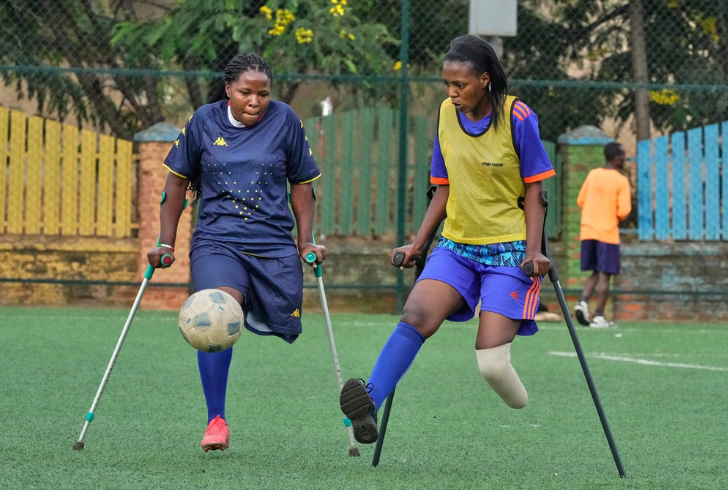
Instagram | aljazeeraenglish | Amputee football blends traditional soccer rules with high-intensity crutch-based mobility and upper-body power.
In Kigali, amputee football carries a deeper social role. The sport supports emotional recovery and helps rebuild trust in communities shaped by difficult history, including the 1994 genocide, when around 800,000 Tutsis and moderate Hutus were killed over 100 days.
Rwanda has more than 3,000 lower-limb amputees, including survivors of conflict, road accidents, and illness. Within this group, football has become a shared platform for healing.
Nyiraneza Solange, born two years after the genocide and who lost a leg at age five due to infection, found her path to the sport through inspiration from other athletes. Encouraged by a former coach of Rwanda’s first amputee football team, she quickly gained confidence on the field.
“I don’t even think about I don’t have a leg,” Solange said, describing the freedom and confidence experienced during play. She also highlighted how the game helped overcome social stigma linked to disability.
Louise Kwizera, vice president of the Rwanda Amputee Football Federation, emphasized the sport’s role in rebuilding trust. According to her, the field becomes a place where individuals with different pasts connect as teammates.
“In communities affected by conflict or trauma, the playing field becomes a place of peace. People who may have different pasts come together as teammates,” Kwizera told The Associated Press.
Gilbert Muvunyi Manier, director general of sports development at Rwanda’s sports ministry, described amputee football as a “powerful tool” for reconciliation, healing, and social cohesion. The sport continues to receive attention as a structured pathway for inclusion.
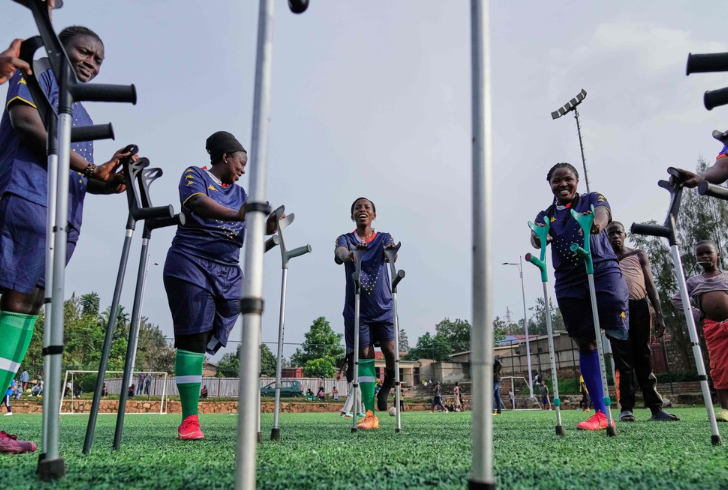
Instagram | aljazeeraenglish | Rwanda aims to expand its presence at the upcoming women’s amputee football World Cup.
Rwanda is preparing for possible participation in the second women’s amputee football World Cup, an invitational event expected to be hosted in Poland or Brazil. During the first edition in 2024, Rwanda was represented by only one player, highlighting both progress and remaining gaps.
Fred Sorrels, manager of the Haitian women’s amputee football team, has supported Rwanda’s program development and expressed encouragement for its growth.
“It’s a win psychologically and mentally for these ladies to have an opportunity to experience wholeness and wellness again,” Sorrels said.
He also noted interest in Rwanda potentially hosting future international competitions, although the country has not yet submitted a formal bid.
Matches often reveal both skill and limitation shaped by physical conditions. Goalkeeper Nikuze Angelique described the challenge clearly.
“It’s hard to save the ball when it goes to the side with the receding hand,” she said.
Despite these challenges, players continue to build strong bonds through shared effort. After games, moments of celebration often include group selfies, laughter, and reflections on future goals.
Angelique shared optimism about reaching the World Cup stage, calling it a long-held aspiration.
“It will be a dream come true,” she said.
Amputee football in Rwanda continues to grow as more than a sport. It stands as a structured space where recovery, teamwork, and identity intersect. From Kigali’s local pitches to international ambitions, the game supports emotional rebuilding while opening doors to global competition.
As participation expands and recognition increases, the field remains a place where resilience finds expression through movement, trust, and shared purpose.