The 2026 FIFA World Cup is already making history, but one of its most talked-about additions will arrive during the tournament’s biggest match. For the first time, the FIFA World Cup final will feature an...













For adults with moderate to severe asthma, managing symptoms does not always require structured exercise sessions.
A clinical trial from the University of São Paulo (USP) found that simply increasing daily walking may offer benefits similar to supervised aerobic training. Both approaches improved asthma control, reduced respiratory symptoms, and supported better quality of life.
The results also showed improvements in anxiety and depression symptoms that lasted beyond the active treatment period.
The study was led by physical therapist David Halen Araújo Pinheiro as part of his doctoral research at the University of São Paulo Medical School (FM-USP). Researchers from the Airway Diseases Unit of the Pulmonology Division at the Heart Institute of Hospital das Clínicas (HC), a hospital complex administered by FM-USP, also contributed to the work.
The findings were published in Pulmonology. The research received funding from FAPESP through projects 21/03745-3, 24/00263-6, 21/04198-6, and 18/17788-3, along with support from the National Council for Scientific and Technological Development (CNPq).
Pinheiro pointed to earlier research that helped shape the trial. “In a previous study, we found that if a patient walks 7,500 steps a day, they already have better clinical control of their asthma,” he said. He currently works as a postdoctoral fellow at the Laboratory for Research in Physical Therapy and Exercise (LIFFE) at HC-FM-USP with a FAPESP fellowship.

Freepik | Increasing daily steps offers the same asthma relief and mental health benefits as supervised workouts.
Researchers invited 480 people to take part. After screening, 52 adults enrolled in the study. Participants ranged from 18 to 65 years old and had uncontrolled moderate-to-severe asthma.
To qualify, participants had to meet several conditions. They needed to be physically inactive, completing fewer than 150 minutes of moderate-to-vigorous physical activity each week. They also had to have received asthma treatment for at least six months, remain clinically stable, have no asthma exacerbation during the previous 30 days, and be nonsmokers.
Before the intervention began, every participant attended an in-person educational session. The session covered asthma pathophysiology, correct medication use, and the role of physical activity in asthma management.
Researchers then randomly divided the participants into two groups.
One group completed supervised aerobic exercise at HC twice a week. Each session lasted 45 minutes and used treadmill-based training under professional supervision.
The second group attended HC once a week for up to 90 minutes. Instead of structured exercise, participants received counseling and encouragement to walk more during their normal routines. They also received weekly walking goals and a smartwatch to monitor their daily steps.
Both programs continued for eight weeks.
Researchers assessed participants at three stages: before the program, immediately after the eight-week intervention, and four months later.
The assessment covered several areas, including physical activity, asthma control, quality of life, anxiety, and depression. Participants also completed seven-day and seven-night monitoring periods. During the day, they wore an accelerometer around the waist to record movement and steps. Another device worn on the wrist during the night measured sleep-related activity.
The assessment team remained separate from the intervention staff. The professionals conducting the measurements did not know which treatment group each participant belonged to, helping reduce potential assessment bias.
Many participants entered the trial with a low quality of life. Most were women who were overweight or had grade 1 obesity. Anxiety and depression symptoms were also common.
After eight weeks, both groups reported fewer respiratory symptoms. The improvement remained four months after the intervention ended.
The study did not show that supervised aerobic exercise was better than increasing daily walking. Both strategies produced similar improvements in asthma control and overall well-being.
“Both interventions are beneficial for patients and provide better clinical control of the disease. And, based on our results, neither strategy outperformed the other,” Pinheiro said.
The practical difference lies in how each approach fits into daily life. Supervised aerobic training requires access to exercise equipment and professional oversight. Walking requires fewer resources and can become part of an ordinary daily routine.
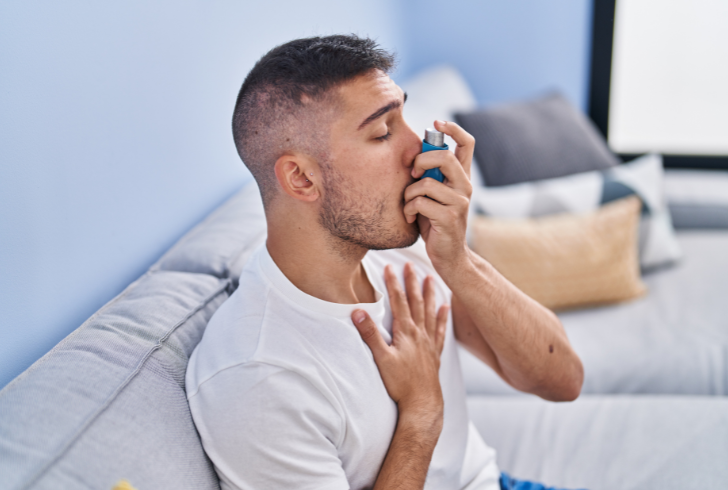
Freepik | Combining asthma medication with physical activity leads to better disease control and enhanced well-being.
Researchers waited four months before the follow-up assessment. This gap allowed participants to return to their normal routines without continued study contact influencing their activity.
During that period, some participants from the aerobic training group said they had joined gyms and continued using treadmills. People in the behavioral intervention group generally continued walking as part of their daily routines.
Weather changes became one of the main reasons some participants stopped their activities. Even so, both groups remained more active than they had been before the study.
The aerobic exercise group increased its average daily step count by 1,537 steps after the intervention. At the four-month follow-up, the increase stood at 983 steps compared with baseline.
The behavioral intervention group added an average of 1,126 steps per day after eight weeks. Four months later, the increase remained at 996 steps.
Interestingly, the behavioral group recorded a slightly higher step increase at follow-up than the aerobic exercise group.
The findings support physical activity as part of asthma management, but they do not suggest stopping prescribed medication.
Pinheiro stressed that participants in the study continued their medical treatment according to recommendations from the Global Initiative for Asthma (GINA). Both walking-based activity and aerobic exercise served as additions to standard medical care.
Asthma medication remains an important part of treatment, particularly for people with moderate to severe disease. Physical activity can complement that care by supporting better disease control, fitness, quality of life, and mental well-being.
The findings show that physical activity can be a practical part of asthma management. Increasing daily steps may be especially useful for people who cannot attend supervised exercise sessions, since walking requires little equipment and can fit into a regular routine.
Still, activity plans should match a person’s asthma severity, fitness level, symptoms, and overall health. The study supports walking and aerobic exercise as complements to prescribed treatment, not replacements for asthma medication. Medical guidance can help patients choose a safe and suitable level of activity.