The 2026 FIFA World Cup is already making history, but one of its most talked-about additions will arrive during the tournament’s biggest match. For the first time, the FIFA World Cup final will feature an...









Australian rules football has always featured traditions that set it apart from other sports. Among them, the role of the runner remains one of the most fascinating.
Charged with carrying instructions directly from the coach to players during live play, runners operate in the middle of the action without becoming part of the contest. They witness heated moments, tense tactical decisions, and unforgettable incidents from a perspective few people ever experience.
While the position comes with strict responsibilities today, earlier decades produced stories that revealed just how unpredictable the job could become. From calming furious players to delivering game-changing messages, runners often found themselves at the center of football history.
One of the most unforgettable moments involving a runner came during an Army Reserves Cup match in 1985. Collingwood reserves player John Bourke became involved in an incident that remains one of the most controversial scenes in Australian football.
The confrontation began after Bourke kicked a Sydney Swans player. When the field umpire rushed in and pulled out a notebook and pencil to report the offense, Bourke reacted by kicking at the umpire’s leg before pushing him to the ground.
The shocking sequence prompted immediate reactions from commentators on Seven’s broadcast.
Ray "Slug" Jordon exclaimed, "Oooh, he's just whacked the umpire. That's unbelievable."
Commentator Peter Landy quickly added, "You have got to get the Collingwood runner out now."
Jordon responded, "He'll whack the runner now. I'd take him off now, the boy... You've got to take the boy off."
That responsibility fell to Mark McKeon, who had played alongside Bourke at Preston the previous season. McKeon later reflected that Bourke had already developed a reputation for losing control.
"The year before he actually jumper-punched an umpire. But the umpire was so scared he didn't report him," McKeon recalled. "John was a great person, and there was no doubt he had the talent to become a 100-game senior Collingwood player."
McKeon attempted to guide Bourke calmly toward the bench by placing a reassuring hand on his shoulder. The situation looked under control until a spectator shouted abuse from the sidelines. Bourke immediately jumped the fence and struck the fan, turning an already chaotic afternoon into one of football's most infamous moments.
The punishment reflected the seriousness of the incident. Bourke, who appeared in 14 reserve games for Collingwood, initially received a 10-year suspension before it was reduced to six years.
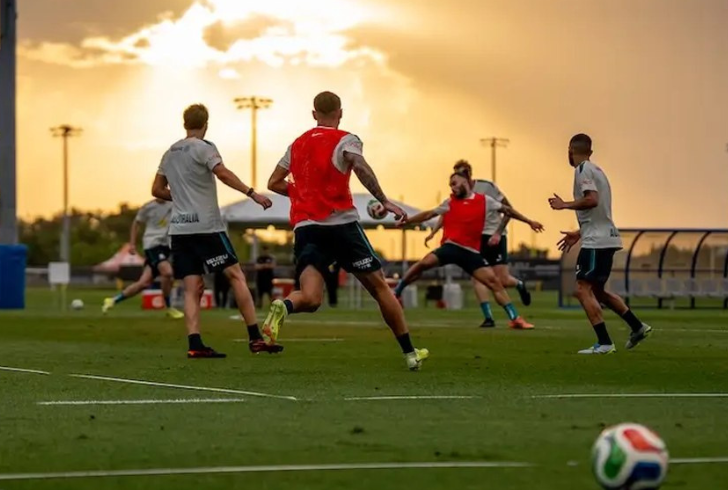
Instagram | football360au | Because AFL fields are too vast for shouting, runners remain a unique, albeit highly restricted, communication necessity.
The role of the runner has changed dramatically over time. Before official recognition, coaches often relied on trainers to carry both water and tactical instructions onto the field.
The Victorian Football League formally approved runners in 1955. The decision was partly designed to stop leading coaches such as Phonse Kyne, Norm Smith, and Reg Hickey from finding creative ways around communication rules during matches.
For several years, clubs could use two runners in each game. Eventually, league officials tightened the regulations after deciding too many people were entering the field during play.
Modern AFL rules place significant limits on when runners can enter the ground and how long they may remain there. Even with those restrictions, the position remains unique in professional sports. Unlike smaller playing arenas where coaches can simply shout instructions, Australian rules football covers such a large field that direct communication often requires someone to physically carry the message.
That responsibility places runners in a trusted position. They hear a coach's immediate reactions before tactics are adjusted or emotions settle. Although players receive those instructions directly, the conversations returning to the coaching box rarely match the detail of the original message.
Former Collingwood runner Noel Duncan experienced an unusual introduction to AFL football during his first senior match in 1998.
Before the opening bounce, Duncan followed instructions to check communication lines between the interchange bench and the coaches' box. Reliable communication was considered one of the most important parts of the job.
After picking up the telephone, Duncan expected a routine equipment check. Instead, loud voices filled the receiver.
The Richmond club song echoed through the headset.
"Yellow and black..."
Then came the familiar chorus.
"Oh we're from Tiiiigerlaaaaand."
Unsure whether the phone had been connected to the wrong coaching box, Duncan remained silent until the singing stopped.
A voice then declared, "It's the best song."
Another quickly agreed.
Only afterward did Duncan realize the singers were Collingwood coach Tony Shaw and assistant Danny Frawley. Just minutes before facing Richmond, the pair had been enthusiastically singing the opposition's club anthem.
The unusual pre-game ritual certainly did not distract the Magpies. Collingwood dominated the opening quarter by kicking seven unanswered goals before finishing with a convincing 45-point victory.
The episode remains one of the lighter memories shared by AFL runners, highlighting how even high-pressure match days occasionally produced moments of humor behind closed doors.
Many of the game's most memorable runner stories centered on delivering messages exactly as instructed. One lesson became part of football folklore through Norm Smith, one of the greatest coaches in Australian rules football.
During one match, Smith sent runner Sam Allica to deliver a blunt message to star midfielder Ron Barassi, urging him to lift his performance. Barassi, who was living with the Smith family at the time, reacted with frustration.
"You go back and tell Norm he can get stuffed."
Without slowing down, Allica calmly replied, "I only bring the messages out, I don't take them back."
That response became an unwritten rule among runners for years.
The same challenge appeared decades later at Subiaco. Chris Connolly instructed Fremantle runner Leigh Walker to bring forward Jeff Farmer, known as the original "Wizard," off the field.
Walker delivered the instruction, but Farmer had no interest in leaving.
"You can tell Connolly to get f---ed. I'm staying here."
Instead of repeating the response, Walker returned to the bench and softened the situation.
"He thinks the world of you Chris, and will be off shortly," Walker joked.
A more serious communication breakdown followed during Fremantle's Round 19 clash with North Melbourne in 2003. With two runners carrying several instructions at once, Connolly stressed one priority above all else: move Luke McPharlin behind the ball to protect a narrow lead.
Walker and fellow runner Justin O'Dwyer each believed the other had delivered the instruction. Neither had.
As North Melbourne surged forward, Connolly demanded answers while football manager Steven Icke blamed the runners for the mistake.
Walker finally reached McPharlin with less than two minutes remaining. The defender immediately took position behind the ball and produced a decisive spoil moments later. Fremantle scrambled a behind through Des Headland, the final siren sounded, and the Dockers escaped with a one-point victory.
Walker later summed up the dramatic finish with a smile.
"We had it under control, mate. We just ran out of paper to write all your bloody messages on."
Former Port Adelaide runner David Arnfield discovered that carrying messages sometimes meant stepping into uncomfortable situations.
Before Port Adelaide entered the AFL in 1997, legendary coach John "Jack" Cahill occasionally used Arnfield to deliver pointed comments directly to umpires during SANFL matches.
One message read simply:
"Jack thinks you're a cheat."
The umpire fired back, "You can tell Jack to get f---ed. Now get off the ground."
When Port joined the AFL, everyone agreed those exchanges had to stop. The promise lasted only until the third quarter of the club's first AFL match, when Cahill again instructed Arnfield to deliver the same assessment to veteran umpire Peter Carey.
Carey simply looked at Arnfield, shook his head, and ignored the comment.
Another assignment proved far more dangerous.
During a match against Sydney, Cahill instructed Arnfield to stand in the area where champion full-forward Tony Lockett usually led for marks. At the time, runners faced very few restrictions about where they could stand during play.
Arnfield followed the instruction until Lockett noticed him.
"Don't stand there," Lockett warned.
When Arnfield stayed put, Lockett delivered another warning.
"I don't want to get reported, and you don't want to get killed. So don't f---ing stand there."
Arnfield quickly moved away before returning to the bench, explaining that the umpires had ordered him from the field. Looking back, leaving that position may have been the safest decision of the day.
A similar story involved longtime Hawthorn runner George Stone. Coach Allan Jeans wanted fiery forward Dermott Brereton removed after becoming increasingly frustrated during a match.
As Stone approached, Brereton's body language suggested confrontation was likely. Instead of speaking to him, Stone called over another blond-haired teammate, Russell Morris, who had already kicked several goals, and escorted him to the bench.
When questioned afterward, Stone simply explained,
"I made a life-saving decision."
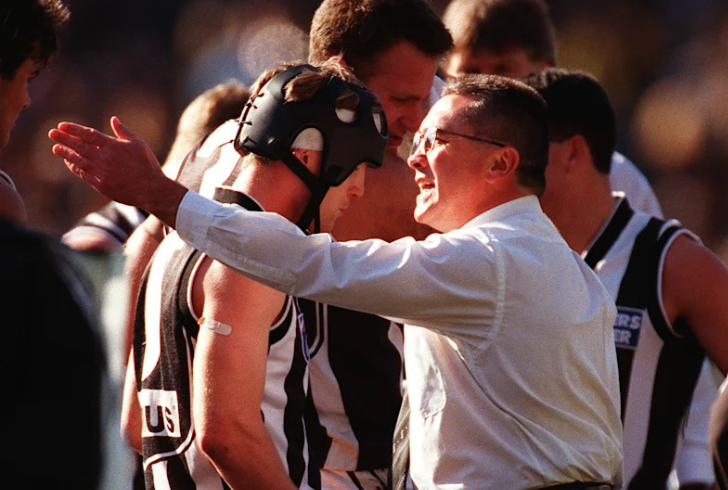
archive.is | Tony Shaw once tested using an earpiece to maintain live contact with on-field runner Mark McKeon.
Technology briefly found its way into the runner's role when Tony Shaw experimented with giving Mark McKeon an earpiece connected to the coaching box. The idea allowed Shaw to communicate while McKeon remained on the field.
The problem was simple. Everyone nearby could hear the conversation.
An umpire eventually told McKeon, "Tell Shawry to shut up. And get that thing out of your ear."
Players also found creative ways to use runners. Former Collingwood captain Darren Millane often called McKeon over after kicking a goal. Standing on the opposite side of an opponent, Millane loudly mocked the rival player while pretending to speak with the runner.
According to McKeon, Millane would say things such as, "Can you believe what I am doing to this bloke? His parents would be so embarrassed watching this." Most opponents stayed silent rather than respond.
Arnfield occasionally used similar tactics, even criticizing his own teammate Josh Carr within earshot of opponents because he knew it would ignite Carr's competitive edge.
Former coach Danny Frawley once instructed a runner to warn an opposition veteran that any more rough treatment of young forward Chris Tarrant would result in a confrontation after the match. The warning, however, never reached its intended target.
Arnfield also learned another lasting lesson from Cahill. Early in his career, he softened a harsh coaching message before delivering it to a player because Port Adelaide comfortably led the game.
Cahill immediately challenged him.
"Do you want to do this job?"
When Arnfield answered yes, the coach replied,
"Never change a message. I am the coach, not you."
That instruction stayed with him for the rest of his career, even when delivering difficult words placed him in uncomfortable situations. During one match, Arnfield passed along a blunt halftime message to Dwayne Russell, who responded by punching him hard in the chest.
The AFL runner has never appeared on the scoreboard or collected match-winning statistics, yet the position has influenced countless moments across football history.
From calming furious players and carrying tactical instructions to surviving heated exchanges with coaches, umpires, and opponents, runners experienced the game from one of its most unusual vantage points.
Their stories reveal the pressure, humor, and unpredictability hidden behind a role that quietly helped shape many unforgettable afternoons in Australian rules football.